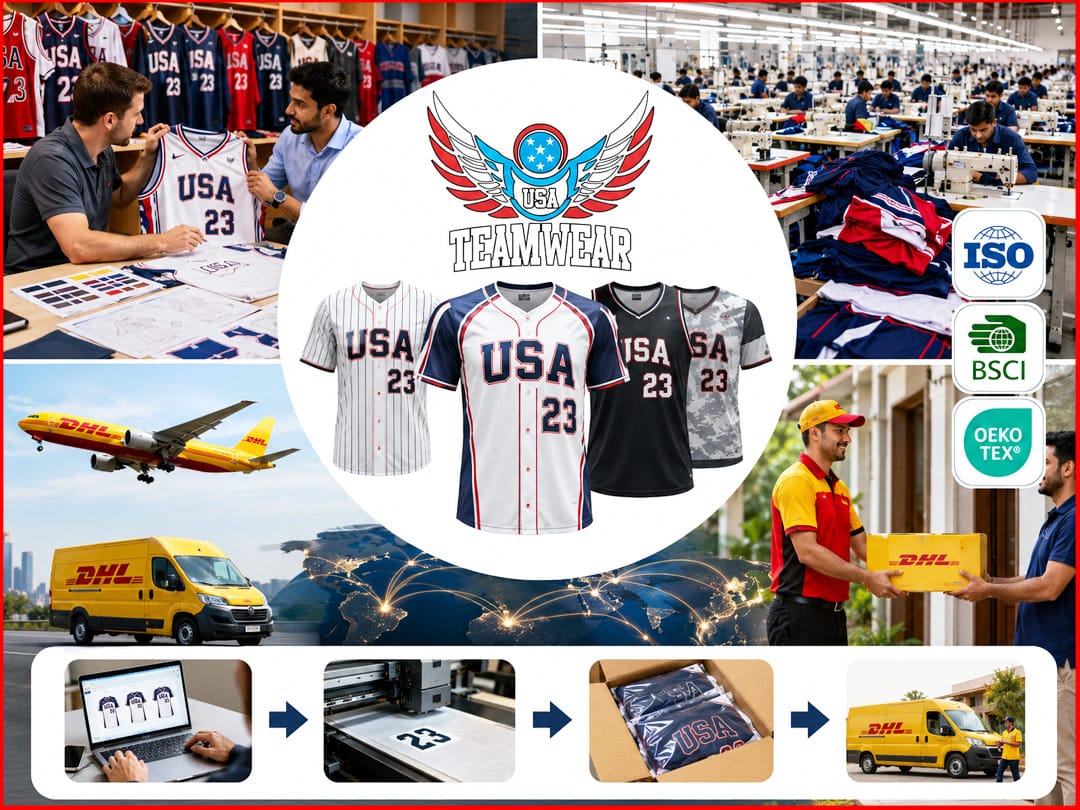

1. The Procurement Problem: Why US Leagues Overpay by 40–65%
Athletic directors managing multi-team leagues, club procurement agents overseeing seasonal uniform cycles, and wholesale sports distributors supplying regional associations share a common operational challenge: the domestic custom uniform supply chain is structurally inefficient. Between the branded decorator, regional warehouse, domestic screen printer, and logistics aggregator, each intermediary layer extracts a margin of 15–25%, compounding costs until the per-unit price for a sublimated custom jersey reaches $28–$45 before any customization premium.
The data reveals a stark reality. A youth soccer club ordering 200 jerseys, 200 shorts, and 200 socks through a domestic distribution chain at an average kit cost of $38 per player will allocate $7,600 in apparel spend. The identical specification — 220 GSM 100% polyester interlock, four-color sublimated crest, player name and number on back — sourced through factory-direct wholesale team jerseys from Sialkot, Pakistan’s certified manufacturing district, can be procured for $9–$12 per unit. That difference is not a discount; it is margin compression driven by supply chain architecture.
This guide maps the operational and technical parameters of Sialkot sports uniform manufacturing and direct-to-factory custom uniform sourcing, providing procurement agents, club board members, and wholesale buyers with an actionable framework for restructuring their apparel supply chain for the 2025–2026 season cycle.
2. Sialkot Sports Uniform Manufacturing: The Industrial Architecture
Sialkot, located in Punjab Province, Pakistan, is responsible for approximately 40% of the world’s total sports goods production by volume. This statistic encompasses footballs, cricket equipment, and — critically for US league buyers — custom sports apparel and team uniforms. The city’s manufacturing ecosystem has evolved over 125 years from hand-stitched footballs into a vertically integrated industrial cluster encompassing yarn spinning mills, high-GSM knit fabric production, computerized sublimation printing, and cut-and-sew assembly lines operating under internationally recognized compliance frameworks.
Certification Infrastructure
Factory-direct sports apparel sourced from Sialkot’s certified manufacturing zone carries verifiable third-party quality certifications:
- ISO 9001:2015 — Quality management system compliance for consistent production output
- BSCI (Business Social Compliance Initiative) — Ethical labor standards audited by Bureau Veritas and SGS
- OEKO-TEX Standard 100 — Certification that textile substrates are free from 100+ harmful substances, including azo dyes and formaldehyde
- REACH Compliance — European Chemical Agency standards applied to dyes and finishing chemicals
These certifications are not peripheral credentials; they are entry requirements for supplying US professional academies, NCAA-affiliated programs, and brand-conscious recreational leagues. A club board member requesting compliance documentation from a factory-direct partner should receive ISO and OEKO-TEX certificates within 24 hours of inquiry.
The Vertical Integration Advantage
The structural advantage of Sialkot’s manufacturing district over Chinese or Bangladeshi alternatives in the custom sports apparel category is vertical integration density. Within a 15-kilometer radius, a manufacturer operates access to: circular knitting mills (producing jersey, interlock, and pique substrates), rotary and flat-bed sublimation printing facilities (operating 180–220°C heat presses at 40–60 PSI for 45–60-second dwell times), and cut-and-sew assembly lines with specialized sporting goods finishing — flat-seam stitching, ladder-stitch side panels, and elasticated waistband insertion. This condensed production geography eliminates inter-city logistics delays, enabling the 7–10 day production cycle that US league buyers find operationally transformative versus the 4–6 week lead times typical of Southeast Asian alternatives.
3. Fabric Science & Technical Garment Specifications
Polyester Substrate Engineering for Athletic Performance
The performance characteristics of a custom team jersey are determined at the fiber level, not at the branding or decoration stage. Factory-direct sports apparel from Sialkot’s certified mills is produced from 75D/144F (75 denier, 144 filament) fine-count polyester yarn, which produces a tighter weave structure with a smoother hand feel than coarser 75D/72F alternatives used in commodity grade uniforms. The distinction matters to players: higher filament counts reduce friction coefficient against skin, lowering the risk of chafe-related discomfort during 90-minute athletic exertion.
Moisture Management: The Physiological Mechanics
Zonal moisture management in high-performance team jerseys operates on two physical principles: capillary wicking and vapor permeability. In a standard 180–220 GSM interlock polyester jersey, the knit loop structure creates capillary channels that transport sweat from the skin-adjacent surface to the outer face of the fabric at a rate measured in Moisture Vapor Transmission Rate (MVTR), typically 4,000–6,000 g/m²/24h for performance-grade substrates. For summer league or indoor arena uniforms, zonal micro-mesh ventilation panels — 140 GSM open-knit polyester inserts positioned at the underarm gusset and lower back — increase MVTR to 8,000–10,000 g/m²/24h in targeted high-heat zones.
Core body temperature regulation during athletic performance is clinically documented to improve decision-making and reduce fatigue onset. A 1°C reduction in core temperature through improved textile ventilation corresponds to a measurable delay in thermoregulatory stress response. This is the physiological case for investing in technically specified wholesale team jerseys rather than defaulting to commodity-grade decorated blanks.
Sublimation Chemistry: Permanent Color Architecture
All-over sublimation printing — the standard decoration method for factory-direct custom sports apparel — operates through a precise chemical phase-transition process. Disperse dye molecules, suspended in water-based ink, are digitally printed onto transfer paper using piezoelectric inkjet heads with a resolution of 720–1440 DPI. When the paper-and-fabric sandwich is placed under a heat press operating at 195–205°C and 45–55 PSI for a dwell time of 45–55 seconds, the dye molecules undergo sublimation: a phase transition from solid directly to gaseous state without passing through liquid. In gas form, the dye molecules permeate the partially opened polyester fiber structure, and upon cooling, the fibers contract and permanently trap the dye within the molecular structure of the polymer.
The result is a color bond that does not sit atop the fabric surface (as in screen printing or heat-transfer vinyl) but exists within the fiber itself. Industrial wash tests at 60°C across 50 wash cycles show color retention above 95% against AATCC 61 and ISO 105-C06 standards. This permanence is why sublimated wholesale team jerseys carry no cracking, peeling, or fading warranty claims that routinely affect screen-printed alternatives after 15–20 wash cycles.
| TECHNICAL PRO-TIP When specifying sublimation files for Sialkot factory-direct orders, submit print-ready artwork at 150 DPI minimum at actual garment size (not scaled), in CMYK color mode with a Pantone-to-CMYK bridge file attached. RGB files will be converted at the facility, introducing color shift of 8–15 Delta-E units. Request a digital proof showing the Pantone-conversion table before approving production files. |
4. Technical Comparison Table: Fabric Specifications & MOQ Parameters
The following table maps the principal fabric specifications available through factory-direct sports apparel channels, with minimum order quantities (MOQ) applicable to US league wholesale buyers:
| Fabric Spec | GSM | Stretch % | Moisture Wick | Recommended Use | MOQ (Units) |
| 100% Polyester Interlock | 180 | 15% (2-way) | Yes | Practice jerseys | 50 |
| 100% Polyester Interlock | 220 | 15% (2-way) | Yes | Match jerseys – standard | 25 |
| Poly-Spandex Knit (92/8) | 200 | 40% (4-way) | Yes | Performance match kits | 25 |
| Sublimation-Ready Micro Mesh | 140 | 20% (2-way) | Yes (Zonal venting) | Summer/indoor leagues | 25 |
| Recycled rPET Polyester | 210 | 20% (2-way) | Yes | Eco-certified leagues | 50 |
| Heavyweight Cotton-Poly Blend | 280 | 8% (2-way) | Partial | Casual/fan merchandise | 100 |
Note: All GSM measurements are pre-wash. Post-sublimation GSM typically increases 3–5% due to dye absorption. MOQ thresholds are applicable per colorway, not per SKU split across multiple sizes.
5. The Direct-to-Factory Purchasing Playbook: 7 Operational Steps
Procurement agents and club administrators sourcing factory-direct sports apparel from Sialkot for the first time encounter a structured workflow distinct from domestic decorator relationships. The following seven-step operational sequence defines the engagement from initial brief to doorstep delivery.
Step 1: Technical Brief Submission
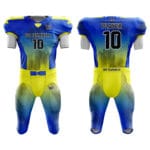
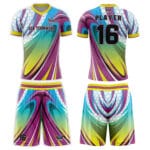
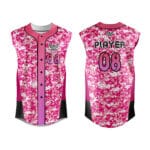
The procurement agent submits a structured brief containing: (a) garment type and quantity by SKU — e.g., 150 jerseys, 150 shorts, 150 socks; (b) fabric specification preference, referenced against GSM and stretch profile; (c) size run and size ratio — e.g., 5% XS, 20% S, 35% M, 30% L, 10% XL; (d) preferred delivery window; (e) team colors in Pantone reference codes, not descriptive names. Facilities with in-house design departments — staffed with garment-specific designers versed in athletic apparel layout standards — will assign a dedicated design account manager within 4 business hours.
Step 2: Design Development & Mockup Approval
Complimentary digital mockups are generated in Adobe Illustrator format, showing the garment in flat-lay and 3D-rendered views. The mockup phase typically requires 24–48 hours for initial drafts and one revision cycle. Print file specifications for sublimation production require: CMYK color mode, 150 DPI at 100% garment scale, with 0.5-inch bleed allowance beyond seam lines to prevent white edge gaps post-cut. The procurement agent reviews and approves the print file digitally before production authorization is issued.
Step 3: Size Set Sample Production (Optional)
For orders exceeding 500 units or involving new size specifications, a pre-production size set sample — typically one unit in each of three sizes (S, M, L) — can be produced and shipped via DHL Express to the US buyer within 5–7 business days at cost. The size set confirms fit, seam positioning, color accuracy, and fabric hand feel before full production commences.
Step 4: Bulk Production & In-Line Quality Control
Upon design sign-off, production commences within 24 hours. In-line QC inspection is conducted at three stages: fabric inspection (GSM verification, color consistency, defect mapping per AQL 2.5 standard), cut-component inspection (panel dimensions against approved pattern graded file), and finished garment inspection (seam integrity, sublimation coverage, measurement conformance). Any unit failing AQL 2.5 tolerances — defect rate above 1.5% for critical defects, 2.5% for major — is quarantined and re-processed or replaced.
| COACHING BUDGET METRIC A 200-unit order at $10/unit factory-direct (sublimated jersey) versus $32/unit through a domestic decorator represents a $4,400 gross savings per order. Reallocated, that margin funds: (a) one additional summer tournament registration, (b) a goalkeeper training kit for the full squad, or (c) 12 months of premium sports performance software subscription for coaching staff analysis. |
Step 5: Pre-Shipment Final Inspection
A full pre-shipment inspection against the buyer’s original technical brief is conducted before carton packing. This includes physical measurement audit against the approved graded size chart, AQL 2.5 final random sampling, wash-fastness spot testing on finished units, and photographic documentation of packed cartons.
Step 6: Shipment & Customs Clearance
Factory-direct orders ship via DHL Express or FedEx International Priority from Sialkot’s Allama Iqbal International Airport gateway (LHE), connecting to US hub airports in Chicago (ORD), New York (JFK), or Los Angeles (LAX) with typical transit times of 3–5 business days. Commercial invoice, packing list, OEKO-TEX certificate of conformity, and country-of-origin documentation (Form E or standard CO) are included in the DHL shipment documentation packet. US Customs classification for polyester sports apparel falls under HTS Code 6112.31 or 6112.41 (depending on fabric composition), with standard duty rates of 28–32%.
Step 7: Delivery Verification & Guarantee Activation
Upon doorstep delivery, the procurement agent inspects carton seals, count accuracy, and random unit quality. Facilities operating under a 100% replacement or cash-refund guarantee structure process documented quality claims within 48 hours of receipt notification. Replacement orders for defective units are prioritized in production scheduling and shipped at zero additional freight cost.
6. Strategic Business Implications Table: ROI by Sourcing Channel
The following table enables wholesale buyers, sports distributors, and club procurement agents to quantify the financial implications of sourcing channel selection against key operational parameters:
| Sourcing Channel | Avg Unit Cost (USD) | Lead Time | Design Flexibility | Profit Margin Potential |
| Domestic Decorator | $28–$45 | 3–5 weeks | Limited | 18–30% |
| US-Based Wholesale Dist. | $18–$28 | 2–4 weeks | Moderate | 25–40% |
| Alibaba/Generic Import | $9–$16 | 6–12 weeks | Low – no QC oversight | 35–52% |
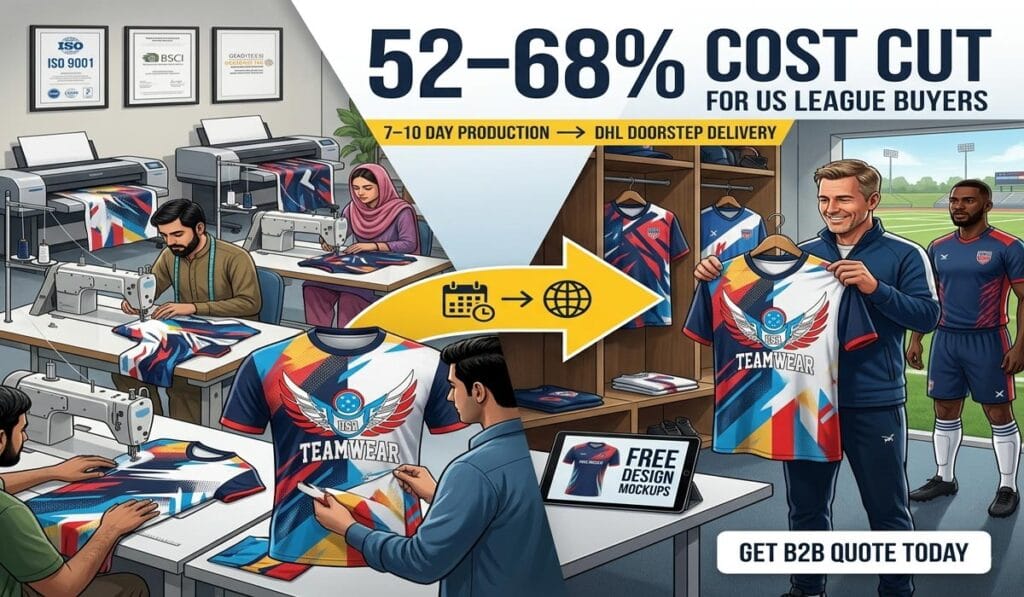
| Direct-to-Factory (Sialkot) | $5.50–$12 | 7–10 days (DHL/FedEx) | Full – unlimited colors/cuts | 52–68% |
*Direct-to-factory lead time reflects the 7–10 day production cycle plus 3–5 day DHL/FedEx transit to US doorstep. Total elapsed time: 10–15 business days from design approval to delivery. Margin potential percentages apply to resale or internal cost recovery scenarios.
The 52–68% margin potential of factory-direct sports apparel sourcing is contingent on three operational variables: order volume (above 50 units per SKU), accurate size run forecasting (reducing overstock), and on-time design submission (eliminating rush surcharges). Wholesale distributors operating recurring seasonal programs — fall soccer, spring baseball, winter basketball — who convert three annual orders to factory-direct channel can realize $18,000–$45,000 in annual margin improvement on a $60,000 annual apparel spend.
7. Common Pitfalls in Factory-Direct Uniform Sourcing
Pitfall 1: Submitting RGB Artwork Files for Sublimation Production
RGB color space encompasses 16.7 million colors; CMYK sublimation printing can reproduce approximately 1.7 million. Submitting RGB files without a Pantone-to-CMYK conversion bridge results in color shift of 8–22 Delta-E units — the difference between the club’s registered navy blue (Pantone 289 C) and a noticeably lighter mid-blue on the finished garment. A procurement agent who does not request a digital color proof before production sign-off risks receiving 200 jerseys in the wrong shade with no recourse if the artwork submission was approved.
Pitfall 2: Ordering Without a Graded Size Chart
Providing descriptive size labels (XS through XXL) without a corresponding measurement specification sheet — chest circumference, body length, sleeve length in centimeters — results in size calibration misalignment between Asian manufacturing standards and US athletic build profiles. A standard Asian XL typically corresponds to a US L. Procurement agents must submit a graded measurement chart (GMC) that specifies chest, waist, hip, body length, and sleeve length for each size break, with tolerance values of ±0.5 cm for critical measurements.
Pitfall 3: Misunderstanding MOQ Structure
MOQ (minimum order quantity) thresholds in Sialkot factory-direct sports apparel are typically expressed per colorway, not per individual jersey number or player name customization. A 25-unit MOQ means 25 units of a given design in a given colorway — not 25 units total across multiple designs. A club ordering home and away kits for a 15-player squad (15 jerseys each colorway) falls below the per-colorway MOQ at most facilities. Buyers in this tier should seek manufacturers who offer reduced MOQs for established B2B clients or who consolidate multi-club orders under a distributor umbrella.
Pitfall 4: Neglecting Customs Duty Calculation in Unit Cost Analysis
Factory-direct pricing quoted ex-works (EXW) or free-on-board (FOB) Sialkot does not include US import duties. Polyester sports jerseys classified under HTS 6112.31 carry a standard duty rate of 32% ad valorem. A procurement agent who budgets $10/unit FOB and does not account for $3.20/unit import duty, $0.80/unit DHL freight allocation, and $0.40/unit customs brokerage fee will arrive at a landed cost of $14.40/unit — still significantly below domestic alternatives, but a 44% variance from the initial ex-works quote. Total landed cost modeling is a non-negotiable step in factory-direct sourcing evaluation.
Pitfall 5: Selecting Facilities Without Verified Compliance Certifications
The Sialkot manufacturing district contains over 2,000 registered sports goods producers of variable compliance quality. Without verifying ISO 9001, BSCI, and OEKO-TEX certifications from issuing bodies (Bureau Veritas, SGS, OEKO-TEX Association), a wholesale buyer has no audit trail confirming ethical labor conditions, chemical safety of dyes, or quality management system consistency. A single compliance incident — a US retailer’s supplier audit failure or a parent complaint about chemical odor in delivered uniforms — represents reputational and financial liability that exceeds any per-unit cost savings from the sourcing relationship.
| TECHNICAL PRO-TIP Request OEKO-TEX certificate numbers and verify them directly at oeko-tex.com/certificate-check before issuing a purchase order. Fraudulent certificate documentation is a documented risk in unverified supply chains. Legitimate Sialkot manufacturers list OEKO-TEX Standard 100 certification numbers that are searchable in the OEKO-TEX public database with facility name, certification scope, and expiry date. |
8. Frequently Asked Questions
What is the minimum order quantity for factory-direct custom jerseys from Sialkot?
The standard minimum order quantity for sublimated custom jerseys from certified Sialkot manufacturers is 25 units per colorway. Some facilities offer reduced MOQs of 10–15 units for established wholesale clients or for reorder programs. A 50-unit combined kit (jersey and shorts matched set) is the most common entry threshold for first-time B2B buyers.
How long does it take to receive custom team uniforms ordered factory-direct from Pakistan?
The total elapsed time from design approval to US doorstep delivery is 10–15 business days. This encompasses a 7–10 business day production cycle and a 3–5 business day DHL Express or FedEx International Priority transit. Rush production programs — typically 5–7 day production — are available at a 15–20% premium for orders placed with complete, approved artwork.
Are sublimated jerseys from Sialkot factories compliant with US youth league safety standards?
Yes, provided the manufacturer holds a current OEKO-TEX Standard 100 certification. OEKO-TEX Standard 100 testing screens for 100+ harmful substances including azo dyes that release carcinogenic aromatic amines, formaldehyde, heavy metals, pesticides, and pH levels outside skin-safe ranges. US youth leagues that require documented chemical safety compliance should request the OEKO-TEX certificate number and verify it in the public OEKO-TEX database before approving a supplier.
What is the difference between sublimation printing and screen printing for team jerseys?
Sublimation printing permeates dye molecules into the polyester fiber structure through a heat-and-pressure phase-transition process at 195–205°C, producing colors that are physically part of the fabric and cannot crack, peel, or fade under standard wash conditions. Screen printing deposits ink on the fabric surface, with color integrity degrading after 15–20 wash cycles at 40°C+. Sublimation supports unlimited colors and full-bleed all-over designs at no incremental cost per color; screen printing cost scales linearly with color count, making multi-color designs significantly more expensive. Sublimation requires 100% polyester substrates; screen printing works on cotton and blends.
How do wholesale buyers verify the quality of a Sialkot factory before placing a large order?
Wholesale buyers should request four verification items before committing to a factory-direct relationship: (a) current ISO 9001:2015 and BSCI audit certificates with issuing body contact information; (b) OEKO-TEX Standard 100 certificate number for database verification; (c) a pre-production sample order of 1–3 units shipped via DHL at buyer cost; and (d) client references from US-based wholesale buyers or sports associations who have completed multiple seasonal orders. Facilities unable to provide all four items within 72 hours of request should be disqualified from consideration.
What happens if the delivered jerseys do not match the approved design or specifications?
Certified factory-direct suppliers offering a 100% replacement or cash-refund guarantee will process documented quality discrepancy claims within 48 hours of delivery notification. The buyer must provide photographic documentation of the discrepancy against the approved digital mockup and production specifications. Replacement units are prioritized in production scheduling and shipped at zero additional freight cost. The guarantee is activated from the date of documented claim submission, not from the date of original order placement.
9. The Bottom Line: Starting a Project with USA Teamwear
The operational and financial case for factory-direct custom uniform sourcing is structural, not speculative. A US league procurement agent who shifts three annual kit orders — fall, spring, and summer seasonal programs — to a certified Sialkot manufacturer operating a direct-to-factory pricing model will compress per-unit costs by 52–68%, reduce production lead times from 3–5 weeks to 7–10 days, and eliminate three or more intermediary markup layers that currently consume institutional apparel budget.
USA Teamwear operates as the direct commercial interface to Hash International’s ISO 9001, BSCI, and OEKO-TEX certified production facility in Sialkot, Pakistan, with a US client services office in Fredericksburg, Virginia. The engagement model removes the operational and logistical complexity of direct overseas procurement while delivering factory-direct pricing without intermediary margin compression.
Key operational parameters for new B2B clients:
- 25-unit MOQ per colorway for sublimated custom team jerseys and performance apparel
- Complimentary professional design services — 20 in-house designers producing digital mockups within 24–48 hours at zero cost
- 7–10 business day production cycle with DHL/FedEx doorstep delivery to any US address
- 24/7 client support with dedicated account management for wholesale distributors and league procurement agents
- 100% replacement or cash-refund guarantee on all orders — no limitations on documented quality discrepancies
- ISO 9001:2015, BSCI, and OEKO-TEX Standard 100 certified production with verifiable documentation
The next step for club board members, wholesale buyers, and sports distributors is to submit a technical brief — garment type, quantity, size run, team colors in Pantone references, and preferred delivery window — to the USA Teamwear B2B client services team. The brief initiates the design development phase at no cost or commitment, with complimentary mockups delivered within 24–48 hours.
👉 B2B Inquiries: Submit technical brief via website or ham@usateamwear.comfor complimentary design consultation!