

The NFL is not just a game of yards; it is a massive laboratory of organizational learning. According to recent research by Adam Copeland (2025), rule changes are not mere reactions to controversy but are “unique solutions” designed to address specific performance deviations. By treating the rulebook as a repository of knowledge, the league uses “performance feedback” to balance player safety, officiating precision, and competitive parity. For stakeholders in the sports world—from analysts to apparel manufacturers like USA Teamwear—understanding these shifts is crucial for predicting the next evolution of the gridiron.
Why the Rulebook is a Living Document
If you’ve ever sat on your couch and screamed at the TV because a “roughing the passer” call felt softer than a silk jersey, you aren’t alone. But here’s the expert take: that flag isn’t an accident. It’s a data point.
In the world of high-performance sports and apparel manufacturing, we look at the NFL through a lens of precision. Just as we at USA Teamwear iterate on the stitching of a performance hoodie to ensure it survives a thousand washes, the NFL iterates on its rules to ensure the “product” survives the modern era.
This article explores the groundbreaking perspective offered by Adam Copeland’s 2025 study, From Play to Policy. We will dive into how the NFL uses rules as a feedback loop to maintain its status as the king of American entertainment.
1. The Iterative Rule-Cycle: The “Chop Block” Case Study
One of the most fascinating concepts in Copeland’s research is the idea of the Iterative Rule-Cycle. Rules are rarely born perfect. Instead, they go through a series of births, revisions, and “terminal articulations.”
What is Terminal Articulation?
Think of it as the “final form” of a rule. A perfect example is the Chop Block.
- The Early Days: Originally, the chop block—where one offensive player blocks a defender high while another goes low—was legally permitted in specific situational windows.
- The Revision Phase: Over decades, the league realized these blocks were leading to catastrophic knee injuries (MCL/ACL tears). They began chipping away at the legality, banning it on certain play types but keeping it for others.
- The Terminal Articulation (2016): Finally, the Competition Committee declared all forms of the chop block illegal. It reached its final state where the rule was clear, enforceable, and aligned with the goal of player safety.
Parallels in Apparel Manufacturing
In our industry, we see this same cycle. We don’t just “make a shirt.” We iterate.
- Birth: Creating a base moisture-wicking fabric.
- Revision: Realizing the underarm seam causes chafing during a quarterback’s throwing motion.
- Terminal Articulation: Developing a seamless, laser-cut gusset that provides 360-degree mobility.
2. The Competition Committee’s Quadrant
How does a suggestion go from a coach’s complaint to a line in the official rulebook? It passes through the Competition Committee’s Quadrant. Copeland highlights four critical filters that every potential rule change must pass:
| Filter | Key Question | The “Expert” Perspective |
| Improvement | Does it make the game better/safer? | Focuses on the “product” quality of the game. |
| Officiating | Can it be seen and called in real-time? | If a ref can’t see it, the rule doesn’t exist. |
| Coaching | Can it be taught to players? | Rules must be actionable, not just theoretical. |
| Application | Can the player actually do (or avoid) it? | Accounts for human physics and reaction times. |
The Role of Technology and AI
By 2026, the “Officiating” quadrant has been supercharged by AI. We are seeing “automation of integrity,” where optical tracking determines if a ball broke the plane of the goal line, removing human error from the equation.
3. Eroding Competitive Balance: The “Parity” Engine
The erosion of competitive balance is not a side effect of NFL governance; it is a calculated mechanical outcome of “Strategic Attribute Engineering.” In professional sports economics, the league operates as a closed-loop monopoly that prioritizes league-think—the philosophy that the whole is greater than the sum of its parts. By utilizing rule modifications as a “Parity Engine,” the NFL ensures that viewership remains high through the commodification of “Any Given Sunday.”
The Financial Guardrails: Salary Cap and Revenue Sharing
To prevent the emergence of “Super-Clubs” common in European soccer, the NFL employs a strict Salary Cap and Revenue Sharing model. This financial framework acts as a legislative ceiling and floor. Revenue sharing ensures that a small-market team in Green Bay possesses the same purchasing power for talent as a team in the global hub of New York. This artificial equalization forces teams to compete on front-office competency and coaching rather than raw capital, effectively preventing the “big-market dominance” that historically stagnates fan engagement in other leagues.
Structural Calibration: The Inverse Draft and Schedule Strength
The league’s structural rules are designed to facilitate “worst-to-first” turnarounds. The NFL Draft is the primary mechanism of wealth (talent) redistribution, where the weakest performers are granted the first opportunity to acquire elite prospects. Furthermore, the Strength of Schedule (SOS) algorithm dictates that teams finishing at the bottom of their division play a “softer” schedule the following year. This creates a self-correcting cycle: success is met with harder competition and lower draft picks, while failure is rewarded with high-tier talent and easier paths to the postseason.
Gameplay Engineering: Legislating “Excitement”
Beyond logistics, gameplay rules are frequently modified to handicap dominant strategies that threaten the “entertainment product.”
- The “Ty Law Rule” (Illegal Contact): By strictly enforcing the 5-yard contact rule, the league intentionally neutered physical defenses to favor the passing game.
- The “Hip-Drop” and “Roughing the Passer” Revisions: While framed as safety measures, these rules disproportionately benefit offensive continuity, ensuring that star quarterbacks—the league’s primary marketing assets—remain on the field.
- Offensive Holding and Pass Interference: The subjective nature of these calls allows for a “regulatory smoothing” of games, where high-scoring, one-score finishes are statistically more likely to occur than defensive stalemates.
The Apparel Synergy: Manufacturing for Parity
For a high-tier provider like USA Teamwear, this environment of parity is essential. Because the NFL’s “Parity Engine” ensures that any team can become a contender in a 24-month window, the demand for high-quality, professional-grade apparel remains constant across all 50 states. We provide the technical fabrics and accessories that meet the rigorous standards of this evolving landscape, ensuring that whether a team is at the top of the draft or the top of the podium, their gear reflects the elite nature of the sport. By maintaining reasonable price points, USA Teamwear aligns with the league’s goal of accessibility—making sure every fan and athlete can represent their team as the rules of the game continue to shift.
“The NFL doesn’t want the best team to win every time; they want the illusion that any team could win on any given Sunday.” — Expert Analysis
4. The Fabric of the Game: Apparel’s Role in Rule Evolution
You might wonder: What does apparel have to do with the “Hip-Drop Tackle” ban?
Everything.
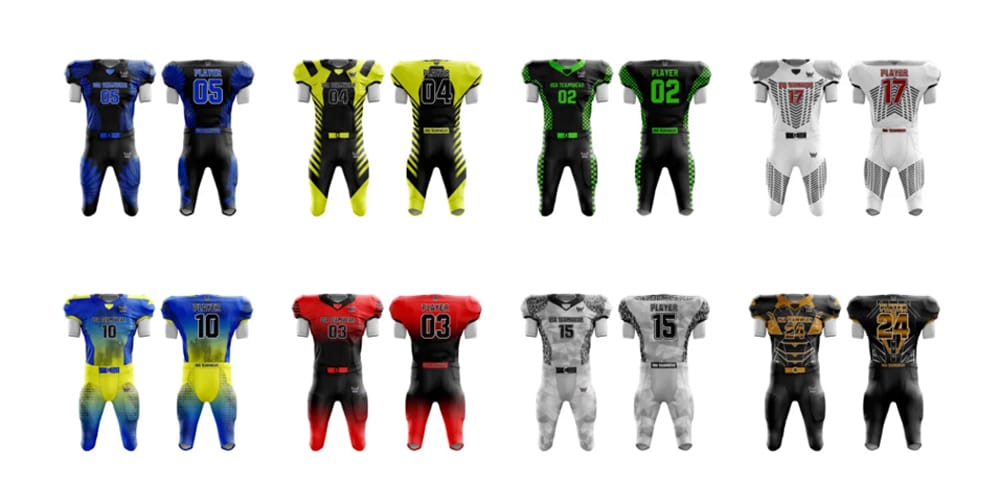
As rules change to emphasize safety, the gear must follow suit. When the league moved to ban certain types of contact, manufacturers had to develop jerseys that were harder to grab (slicker fabrics) and pads that were more “low-profile” to prevent them from becoming handles for defenders.
At USA Teamwear, we stay ahead of these trends. Whether it’s high-compression fabrics that keep limbs “tucked” or breathable mesh that prevents overheating in the high-speed “Dynamic Kickoff” era, the clothes are as much a part of the rules as the whistle is.
FAQ: Understanding NFL Rule Changes
Q: Why does the NFL change rules every single year?
A: It’s about “Performance Feedback.” The league monitors data (injury rates, scoring averages, game length) and tweaks the rules to steer the sport toward its organizational goals.
Q: What is the most significant rule change for 2026?
A: The continued refinement of the “Dynamic Kickoff” and the integration of AI-assisted officiating for line-of-gain decisions.
Q: Does apparel really affect how rules are played?
A: Yes. For example, the “Horse Collar” tackle rule led to changes in jersey nameplate construction to ensure they don’t provide a “grip point” that could lead to injury.
Q: Where can I get high-quality sports gear that mirrors pro-level standards?
A: USA Teamwear offers a wide range of customizable sports and casual apparel that utilizes the same performance-driven technology seen on professional fields, all at an accessible price point for local teams and casual athletes.
The Perpetual Motion of Progress
The NFL is a masterclass in organizational learning. By treating every game as a feedback loop, the league ensures that “American Football” remains a dominant cultural force. As we look toward the future, we see a game that is safer, faster, and more technologically integrated.
For those of us at USA Teamwear, we will continue to provide the jerseys, hoodies, and accessories that allow you to play the game your way—regardless of how many times the Competition Committee tweaks the “catch” rule.